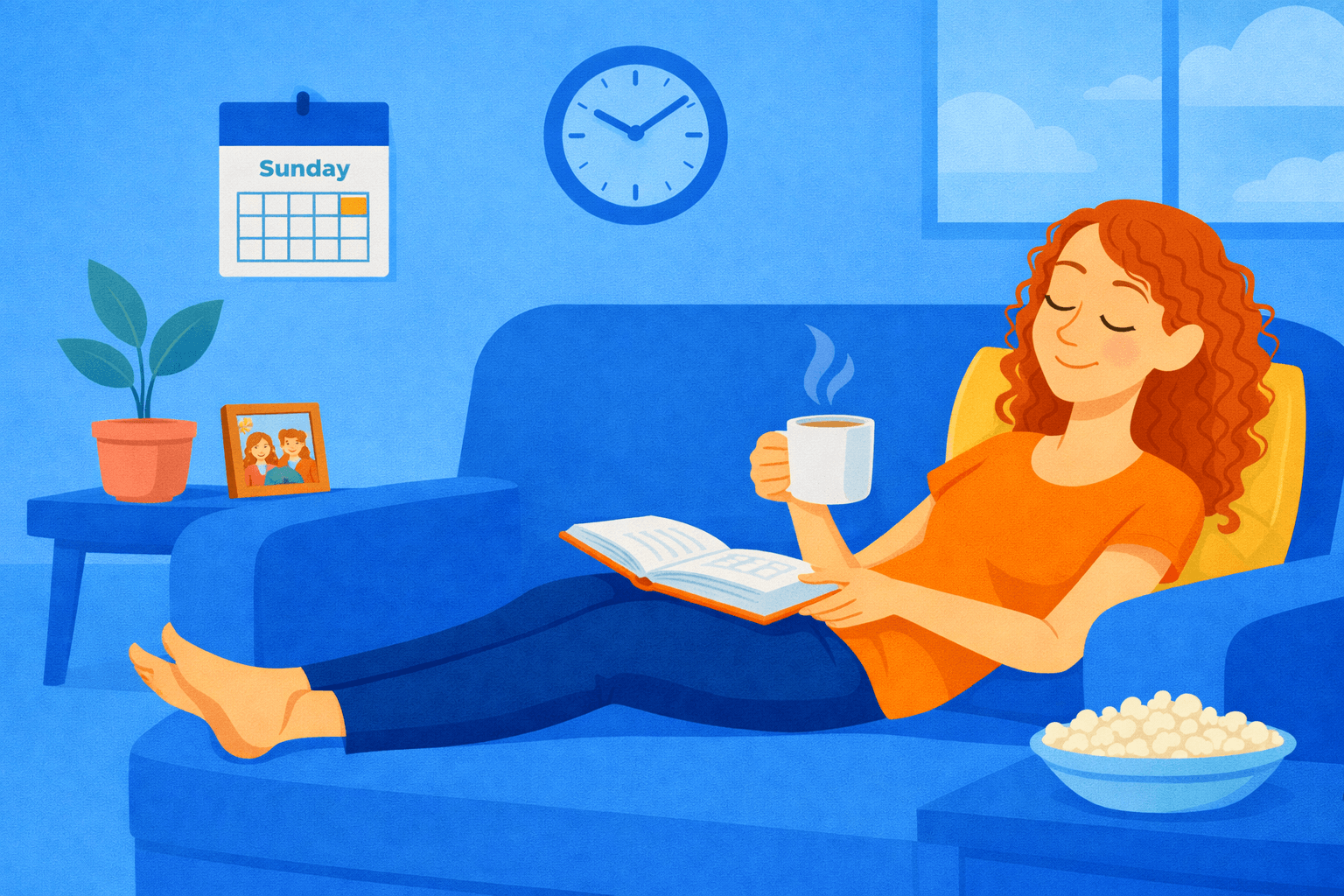
If you work full time, you may find it difficult to be present with your kids after work. That used to be the case for me. I am the founder and CEO of a growing company and have four kids. At night I would often feel stressed out, take quick “breaks” from my kids to check emails, or try to work after they went to bed. This made me stressed out and irritable. I felt like I could never relax. And I was basically giving my kids my “worst” self. Not to mention I wasn’t productive at night anyway. So, I would also be giving my company my “worst” self.
Something had to change.
Over time I discovered some great strategies to be more present with my kids once the workday ended. It is important to implement all five of these strategies. If you just implement one or two, your day may feel off balance and you will find yourself returning to the habit of not being present with your kids, yet again!
5 key strategies to be present with your kids after work
1) Time block your day
The best way to feel good about taking time off at night and being present with your kids after work is to have a good, productive day where you get everything done that you need to get done. As an example, I will time block my days to start early, run 6-10 miles, plan exactly what I want to get done during the work day, and then aim to accomplish what I set out to. If you can time block in this way (I call it “goal blocking”), you will find your day is much more productive and you will feel much better about taking time “off” later.
The key is to be intentional about your day. Don’t spend your day putting out fires and “looking” (but not actually being) productive. Otherwise, you will end your day knowing that there was something missing. It will be harder to relax and be present with family later.
If you feel good about what you were able to accomplish during the day, it will be easier to be present with your kids after work. It will be easier to unwind and relax.
2) Have a “shutdown” routine after work
This is really a game changer. It is my most highly recommended tip to transition from the day to the evening. This should involve three things
First, wrap up loose ends (specifically emails/slack).
If it is going to bother you that you have unread emails either (a) answer them (best approach) or (b) “snooze” them until the next day to clear them out of your inbox. Do the same with slack or team messages. You will feel more at peace if you get these out of the way.
If I have an important message in my inbox that will take time to answer, I often just respond with “I will look at this more in-depth and reply tomorrow.” I then add it to my to-do list for the next day. This clears it out of my inbox and gives me a dedicated time to focus on it.
Second, clean off your desk.
Look at your desktop. Aim to clear everything except your laptop, a second monitor (if you use one), and perhaps a photo.
This means:
- Get rid of sticky notes on your desk. (Incorporate notes into whatever daily/weekly/monthly to-do lists you may have, or wherever they make sense.)
- Get rid of any snacks or beverages.
- In two minutes or less, lightly clean your desk, organize a drawer, or clean your virtual desktop (those random screenshots and temp files we all collect)
This tells you that it is mentally time to move on from your day.
Third, prepare for tomorrow.
Make a list of things you plan to do tomorrow. And goal block the day. Start with when you wake up until when you go to bed. Plan out what you will accomplish and when you will accomplish it. Be specific.
Now you have done three things. You’ve wrapped up the urgent emails/messages from the day. You’ve cleared off your physical/virtual desk so you can start with a clean slate tomorrow. And you’ve planned the following day.
This routine sometimes takes 15 minutes. Sometimes it takes 30 minutes or more. But it is critical to having a peaceful transition into your evening routine.
3) Go on a quick walk around the block or develop a similar routine
I like to physically do something to signal to my brain the workday is over. Here are some ideas.
Go on a short walk.
This can be especially helpful if you work from home. Going on a short walk can give you the same effect as “walking home from work” does. It gives you physical distance from your desk and allows you to mentally reset.
Change your clothes.
I don’t always make it outside for a walk, but whenever my workday is over, I always change from my “work clothes” to my “home clothes” (usually leggings and a workout shirt). This takes just a minute to do and is a true signal to me that the day is over.
Listen to music.
Turn on a playlist of your favorite songs to transition into evening mode.
4) Plan your evening—and be realistic!
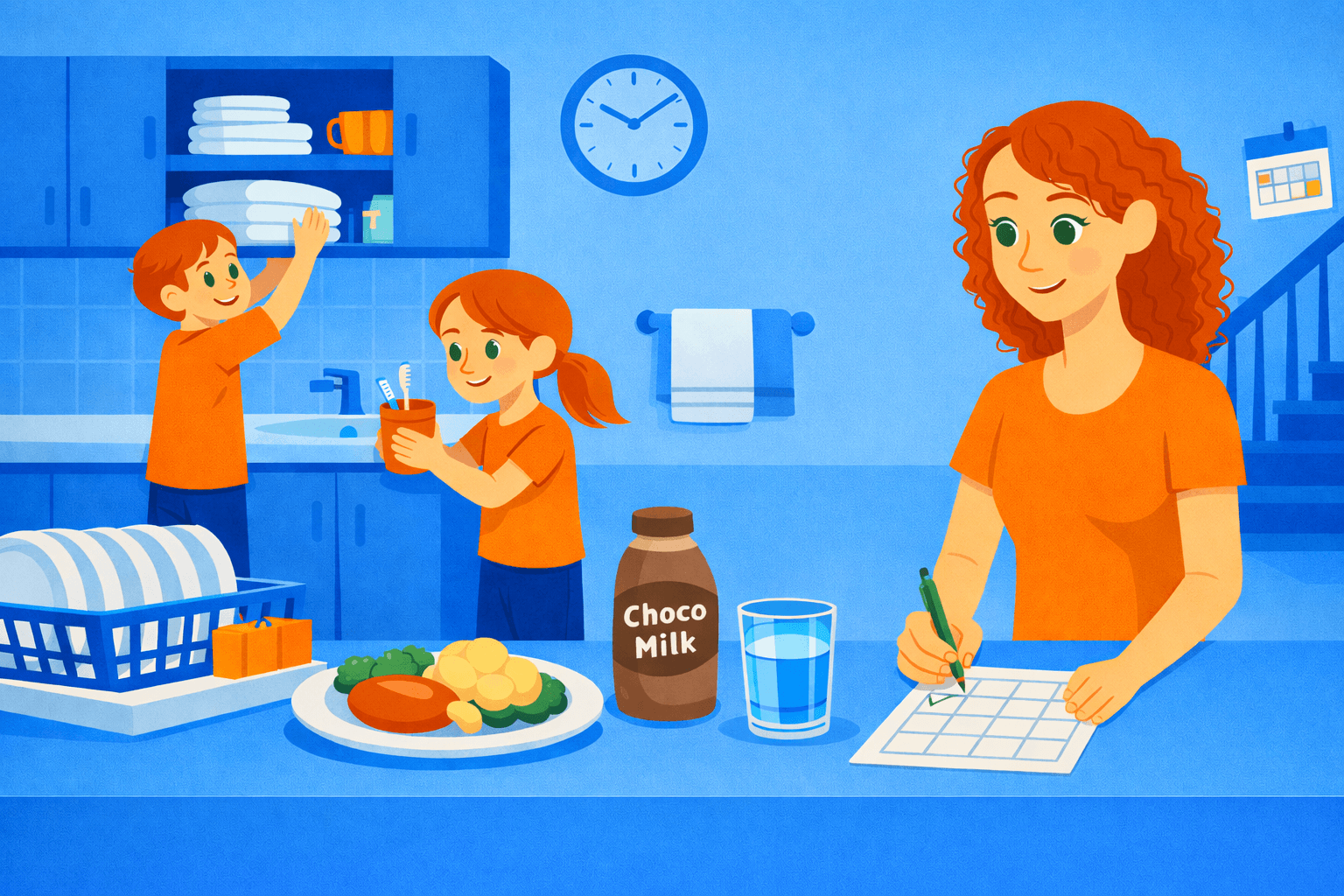
Evening routines often involve making/eating dinner, bathing the kids, brushing teeth and getting into pajamas and reading. It might also involve chauffeuring kids to whatever sports they are playing. And of course, trying to get them to bed on time if they have to be up early the next day.
In other words, evenings are quite stressful at baseline. There is a lot to pack in.
So if you tell yourself you are going to do something like play an educational game with your kids every single night, it may just add to the stress!
Instead, start by being present in the routine you already have.
Then, maybe add something in. For example, I try to pick one night to do something “fun” with the kids—typically Friday, when they do not have to be up early. We’ll do a short memory game or have Mexican food night or play Nintendo Switch.
If you dislike something about your evening routine, see if someone else may happen to like it and be available to help out. For example, I do not like taking kids to soccer (just not a soccer mom!). I also am not a cook and hate making dinner especially for ungrateful kids! So my mom will often take my kids to soccer practice. My husband will often make dinner. And I will do the tasks that I don’t mind as much (getting ready for bed, and reading before bed).
Part of being present with kids is planning an evening that you also find relaxing, enjoyable, even though sometimes, the best-laid plans don’t work out.
5) Remember the benefits
Keep in mind that not working at night is a habit. It won’t be easy at first. You may even feel stressed out and irritable that you are not checking your emails or sneaking in extra work.
But, remember these benefits.
- Taking time off work helps you improve your focus and problem-solving.
- It helps you avoid burnout.
- It reduces stress and thereby improves your sleep quality by helping your body prepare for restful sleep.
- It improves your mood.
- And of course, it allows you to be more present with your kids!
I find I am more creative and motivated when I take dedicated time off of work. I focus better. I am a better mom. And I am less stressed out!
One other benefit to not working at night?
It helps to set a culture of not working. If you are answering emails and messages at 7:30 PM, that becomes part of the culture. This is especially true if you supervise others. If you are able to detach from work, you help give others the freedom to do so too.