A simple bedtime routine for kids that eliminates over-management and nightly stress
For a long time, bedtime in our house was exhausting in a way that felt unavoidable.
Not dramatic. Not terrible. Just a lot of motion, a lot of reminders, and a lot of energy spent on something that should have been routine.
We gave the kids baths, let them watch TV upstairs. Then brought up dinner. And chocolate milk. And waters. And toothbrushes. And of course, what goes up must come down, so then we were going to retrieve all these times left upstairs. Then, when all was said and done, at 8 PM when it was time to turn off the lights, it turned into a negotiation about turning the TV off. Occasionally a tantrum by at least one child. Always frustration.
This was not bad parenting. It was loving, attentive, and extremely common.
It was also a system that required constant adult management and made us all exhausted!
The actual problem was not bedtime
And the problem wasn’t that my kids were difficult.
And it wasn’t that anyone was doing anything “wrong.”
The real problem was over-management.
We had built a bedtime routine where adults were responsible for every step. When kids are treated like passive participants, they act like it. When adults run the whole process, we get exhausted.
Even when I wasn’t directly handling bedtime many days (my husband was), I still felt the effects. The forgotten dishes. The missed toothbrushing. The water requests. The emotional spillover from nightly power struggles.
The system lived entirely in adult brains. And that meant adults carried the full mental load.
The moment I decided to stop managing it
When my husband went out of town, I realized something very clearly: I did not want to temporarily inherit a system that required this much supervision.
So I didn’t.
Instead of tweaking the routine, I redesigned it with one goal in mind:
My kids needed to be the operators, not the passengers.
The bedtime routine we use now
Here’s what changed.
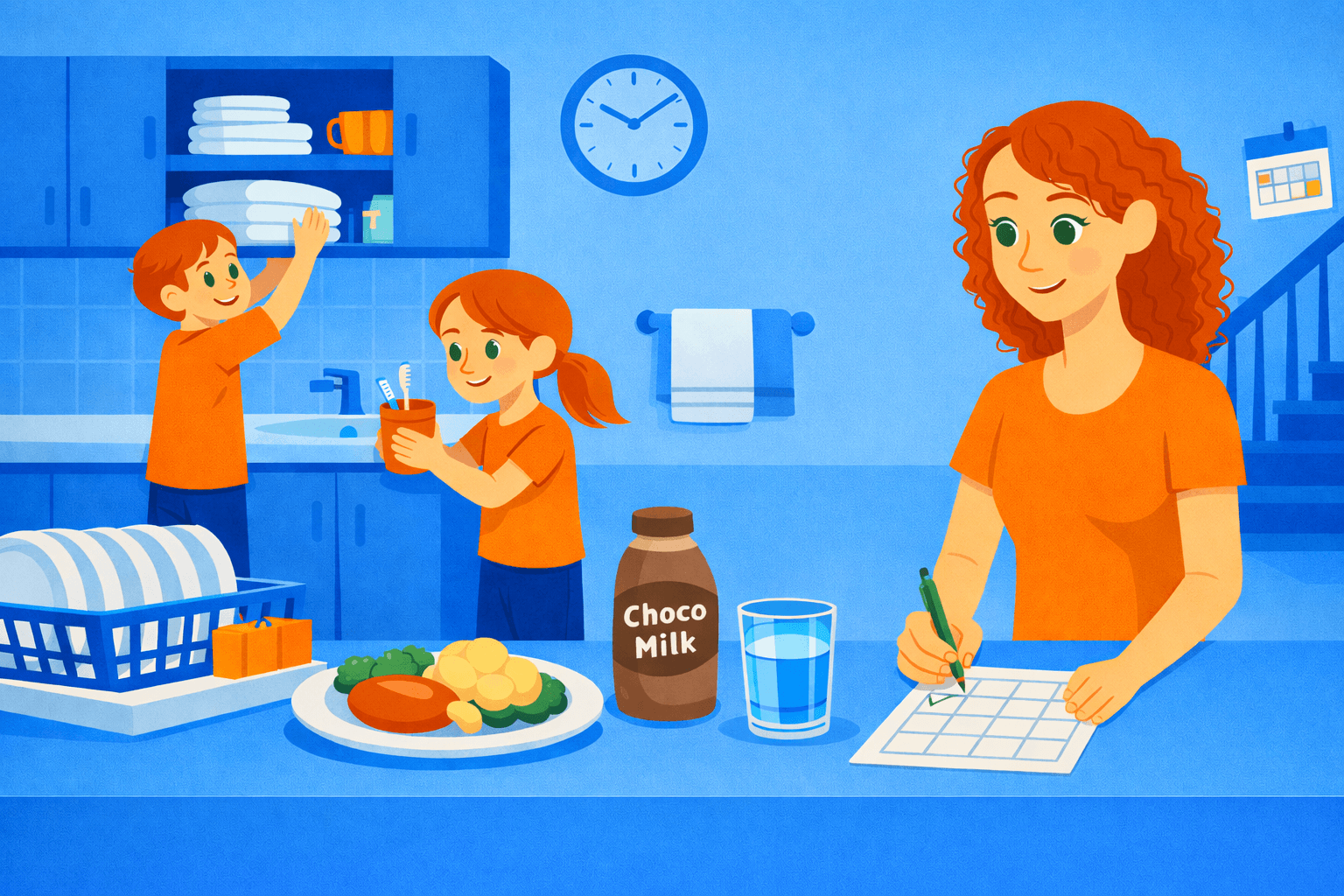
Baths and showers come first. All of them. My kids are fully capable of washing themselves, and picking out their own pajamas. I bathe the baby at the same time the older children shower and get dressed.
Then we eat dinner at the table. When they’re done, they put their plates directly into the dishwasher. I taught them once. Now it’s their job,
If they want chocolate milk or water before bed, they are responsible for getting it themselves. If my five-year-old needs help, my eight-year-old helps him. This is intentional. They can learn to lean on each other when needed rather than always asking me.
Teeth are brushed in the bathroom before the kids even go upstairs to watch TV. Not later.
Only after all of that is done do they go upstairs.
I sometimes go up to read to them. Not every night. And that’s fine.
At 8:00 PM on school nights, the TV goes off. Because this was a constant negotiation, we changed how this works. Instead of my husband or I going upstairs and announcing it is time to turn off the TV, the kids handle this themselves. My eight-year-old now takes his watch upstairs and texts me when the TV is off and they are in bed. I go up and tuck them in (and bring the watch downstairs).
No chasing. No reminders. No arguing.
Why the checklist matters
To make this stick, I printed a simple bedtime routine checklist and hung it on the door that leads upstairs.
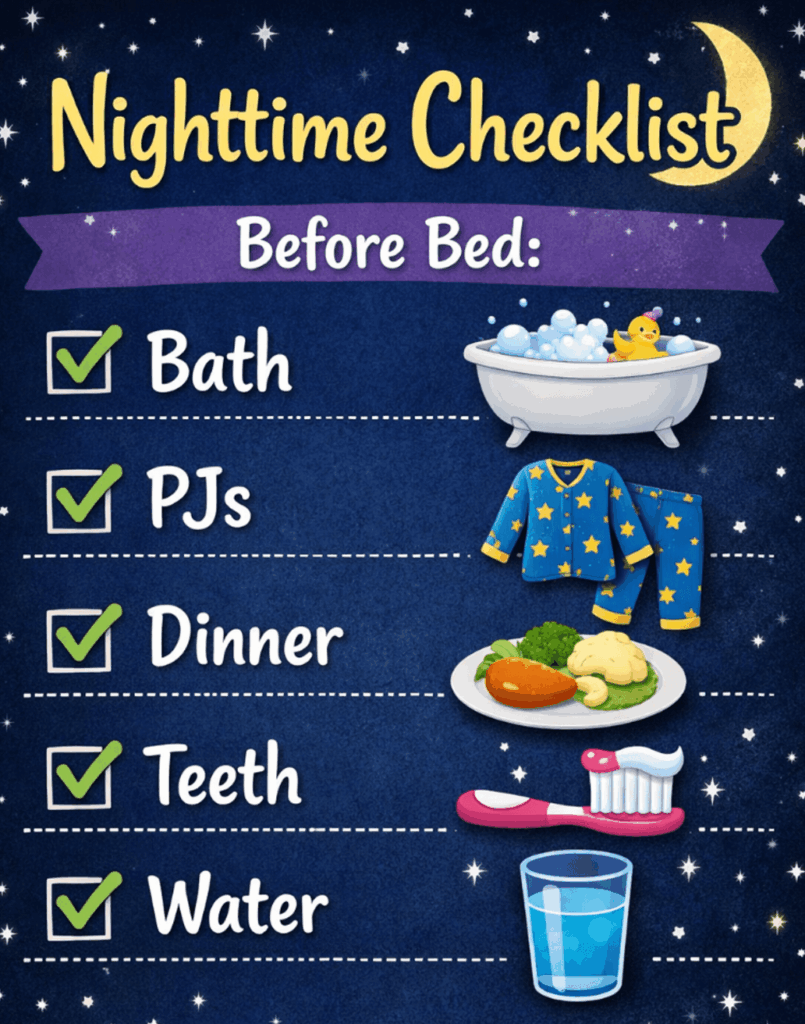
Before they go up for the night, they have to make sure every step is done.
This is important:
The routine does not live in my head anymore.
The checklist removed:
- Repeated reminders
- “I forgot” excuses
- Power struggles at bedtime
- The mental load of tracking who did what
What this actually changed
This system saved time for both me and my husband.
It lowered stress–for everyone, including my kids.
But most importantly, it transferred ownership.
Bedtime is no longer something adults manage. It’s something my kids run.
A hard but freeing truth
A lot of parental exhaustion is not caused by kids.
It’s caused by systems that require adults to micromanage tasks kids are capable of doing themselves.
When you stop over-managing and start designing routines your kids can actually operate, things don’t become perfect. They become sustainable.
You would be surprised at what your kids are capable of doing if you give them the chance to do it. And you will be surprised at how much time you have back when you start to hand over the reigns to your kids.
Looking for more ways to create systems that work? Check out the 7-Hour Challenge, where I show how to protect focused time and eliminate low-value tasks.
I also put together a free guide for working moms with unconventional productivity strategies you can implement immediately.