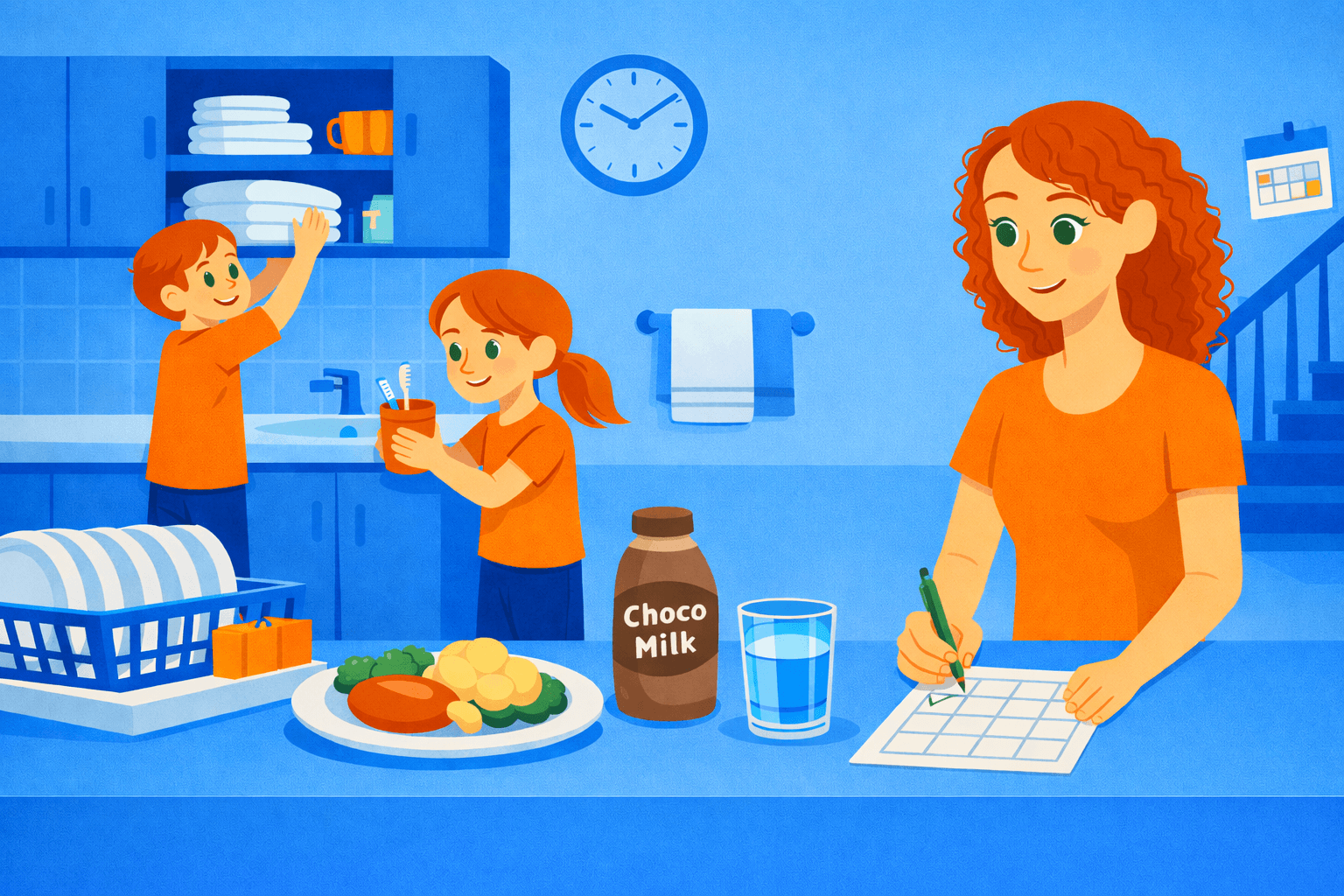
If you are looking for a morning checklist system that will help save you time and keep your sanity, you have come to the right place!
I have seen several benefits from adopting this morning checklist system.
- I am no longer standing in the kitchen issuing instructions like a drill sergeant. I feel less stressed and can enjoy my morning.
- The kids gain more independence and begin to learn to rely on themselves.
- We tend to not forget as many things as we have in the past.
How to Create a Morning Checklist System
Here are some tips for creating a morning checklist system that will save you time and stress.
1. Make sure everyone has their own list, tailored to them.
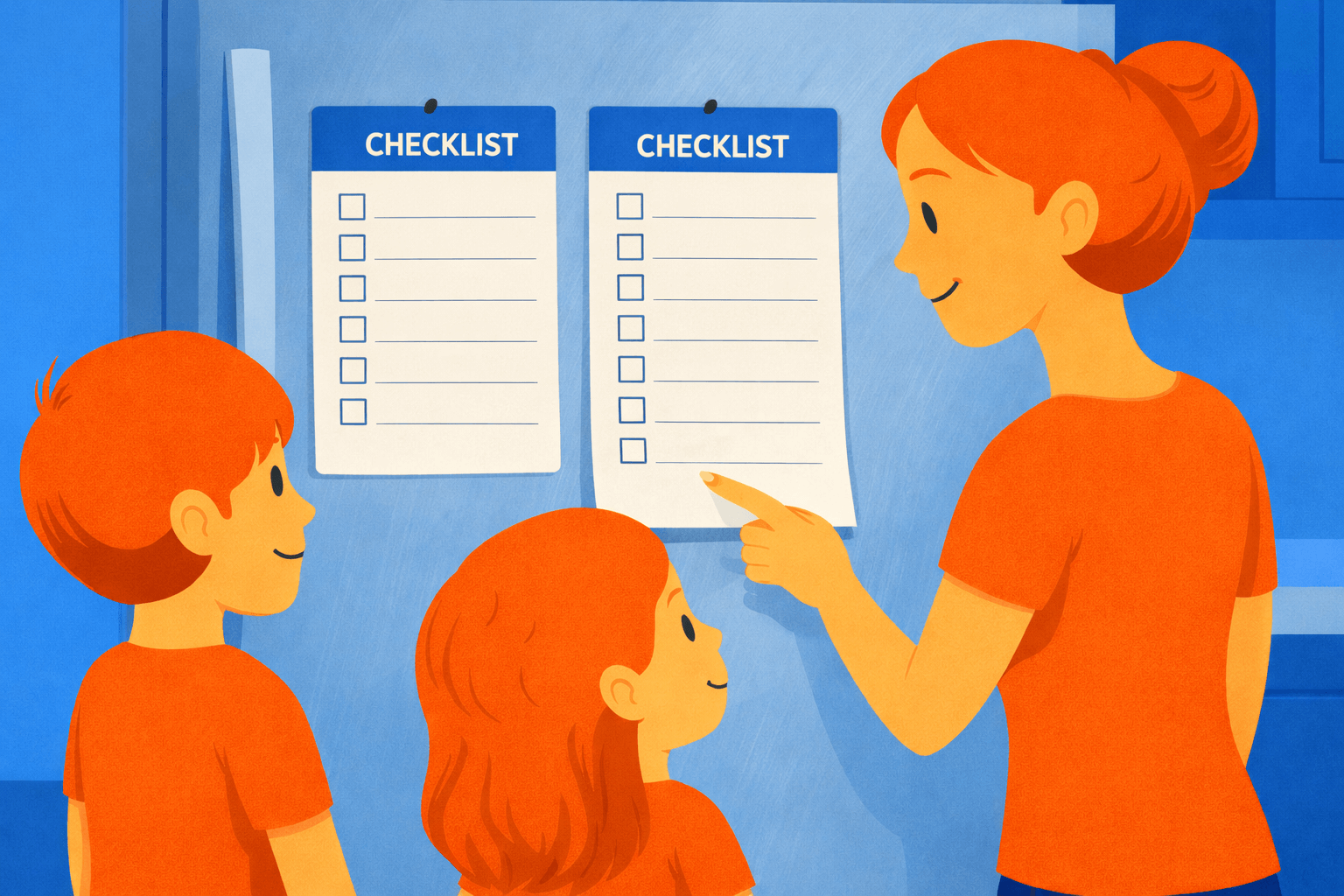
The first thing to note is that everyone should have their own list.
Each of your kids should have their own list. And you should have a list (it beats trying to remember everything yourself!).
In order to get your kids involved and excited about their lists, I find it helpful to have each kid create a draft checklist. They consider everything they think should be on it. Then we discuss it and “finalize” it into their official checklists.
When finalizing the checklists, there are a few things to keep in mind.
- First, this list should also be easy to “read.” My seven- and eight-year-olds can read but my five-year-old is not yet at their level. So, his checklist has pictures and simple words to remind him what to do.
- The tasks should be age-appropriate. My eight-year-old has more on his list than my five-year-old. I recommend you start small and add more tasks over time. I like to slowly move tasks off my list to my kids’ lists.
2. Lock in the what, where, and when.
- What: We use magnetic white boards on our fridge. These are nice because they are easy to “check off”. It is also easy to modify or add tasks.
- Where: This list should be easy to reference (it should be at eye level). Putting it on the refrigerator or a place that is highly visible is a good idea.
- When: We use checklists Monday through Friday. Whether my kids are at school, camp, or the nanny’s house, there are certain things they need to do every day to get ready for the day before leaving the house.
3. Consider what everyone needs to do in the morning.
Your morning task lists may vary based on the age of your child. They may include:
- Go to the bathroom
- Brush teeth
- Eat breakfast
- Change clothes
- Get bag ready for school (make a separate list)
4. Consider what everyone needs to bring with them when they are leaving the home.
I find it helpful to have a “to do” list and a “to bring” list on the same board. This way after everyone gets their basic tasks done, they can focus on packing up for the day. The kids may need the following:
- Backpack
- Water bottle
- Weather-appropriate clothes (boots, gloves, sweaters, rain gear, etc.)
- School books
- Lunch
- Snack(s)
5. Consider adding age-appropriate activities.
If a child gets done with their list, they can read, practice piano, or help with chores. I include these on the bottom of each child’s list as bonus activities.
6. Remind kids to review their checklists (instead of reminding them to complete an activity).
Instead of saying “can you please change your clothes for school?” say, “can you please see if you did everything on your list?” This encourages them to consult the list in the morning rather than rely on you to tell them what to do.
What if something is forgotten? In that case, the natural consequence becomes the teacher.
7. Encourage kids to update their checklists.
Encourage kids to update and modify their checklists. For example, my son has added a task to “do stretches” in the morning. That was not a staple on our list, but if he wants to stretch in the morning, I will not argue with him!
My morning checklist system has helped my kids and I stay on track without me feeling overwhelmed and irritable. We all have better mornings because of it and my kids are becoming more independent as a result. It is truly win-win.
If you want to take this even further, I break down exactly how I structure my days (without managing everyone else) in my 7-Hour Challenge, where I show how to protect focused time and eliminate low-value tasks.
I also put together a my free guide for working moms that walks through top unconventional productivity tips that you can implement right away to make mornings and weekdays feel calmer and more controlled.